
Froth and trouble
Defence was warned it risked spreading contamination with a multi-million-dollar Williamtown RAAF base expansion.
Gabriel Wingate-Pearse reports.

DEFENCE knew it risked spreading underground pollution when it forged ahead with its multi-million-dollar expansion of the Williamtown RAAF base to house new fighter jets.
Internal documents obtained by The Herald reveal the Department of Defence was repeatedly warned of the potential for contaminated groundwater to “migrate” if large volumes of water were removed during construction.
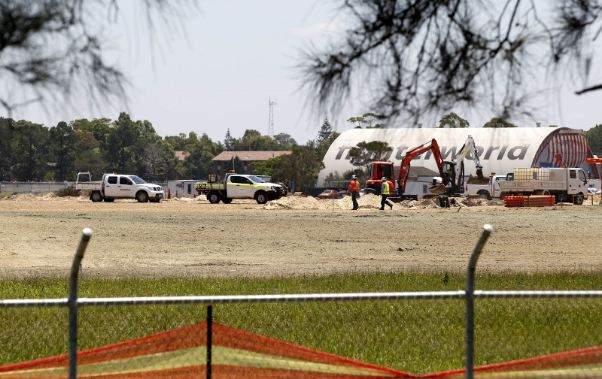
Despite the expert advice, and soon after politicians and RAAF personnel were photographed turning the first sod at the site in May last year, thousands of litres of water were pumped out of the ground for weeks at a time to make way for new buildings.
None of the water was treated, and it was not regularly tested for the chemicals at the heart of the Williamtown contamination scandal, perfluoroctane sulfate and perfluoro octanic acid compounds PFOS and PFOA.
The groundwater was dumped into adjacent bushland, or diverted into the heavily contaminated Lake Cochran, an unlined holding pond, which was emptied onto grass nearby to make room.
Construction workers say they were “up to their necks” in the discarded groundwater, right up until the day the NSW Government went public with the contamination scandal on September 3.
Construction came to a screaming halt as heavily polluted water came frothing out of the ground.
An internal report says test results from “hotspots” across the base returned massively high levels of toxicity – up to 3900 migrograms of PFOS per litre, compared to 0.2 micrograms per litre, the level at which Defence is now treating water.
Those levels of contamination were obvious “due to the foaming effects and visible bubbles” in the water being taken out of the ground, the report said.
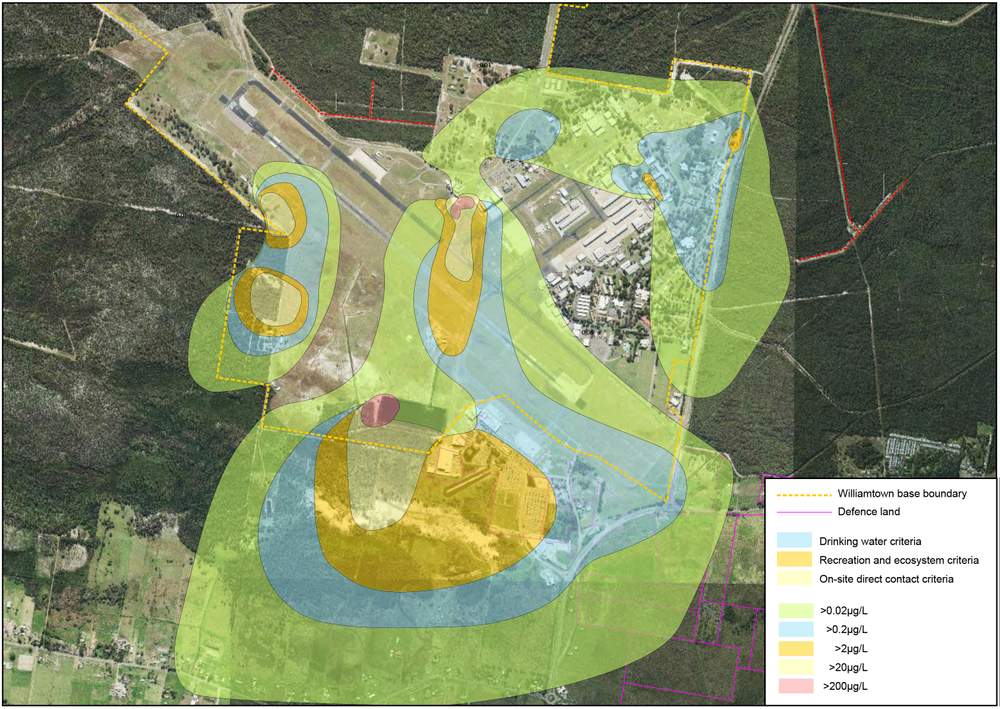
Maps plotting the underground PFOS plume based on sampling data in September 2015
Maps plotting the PFOS plume in the aquifer show a significant expansion of the underground contamination between September and November as construction continued. But Defence denies the link saying the map “does not track contamination movement across the base”.
The changes were due new sampling data, which provided a clearer picture of PFOS concentrations within the construction footprint, the department said. However, Defence failed to explain why it didn’t wait to get the full picture before starting construction in May.
After the NSW Government went public, Defence made an “urgent’’ request for a water treatment plant to be established, revealing that no water was being treated on-site for PFOS before then, contrary to a public statement made by Defence in December.
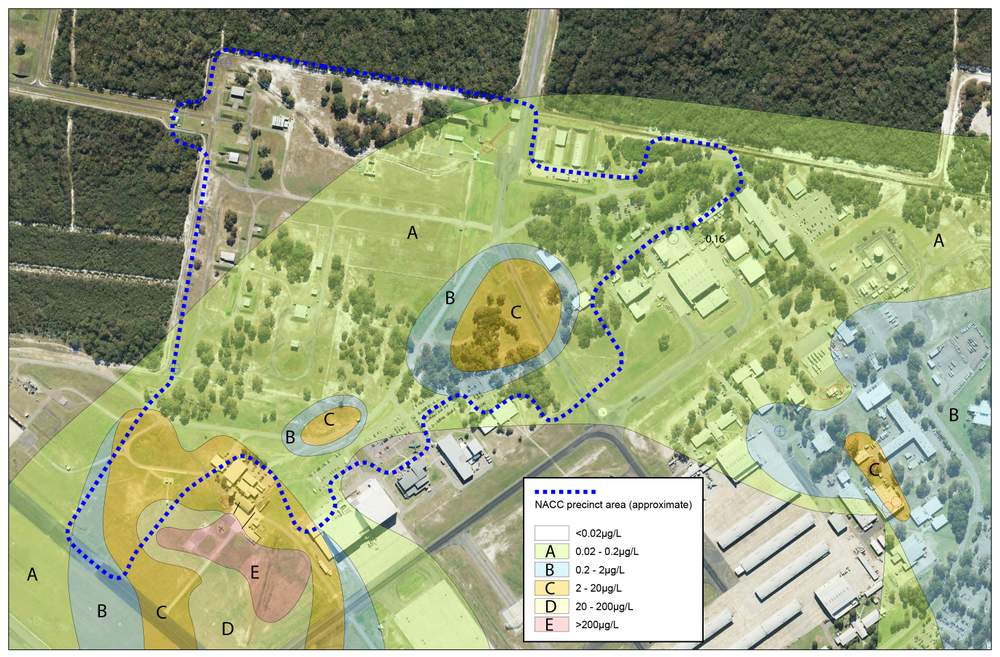
The significantly larger underground PFOS plume in November, 2015.
“Contaminated water that is extracted during de-watering activities required for construction works is treated to a level below the screening criteria and reinjected into the ground...” the statement said.
Defence stuck to its guns this week, saying: “Works were not undertaken in areas where testing found PFOS and / or PFOA concentrations above the adopted level of acceptance ... until the onsite water treatment plant was operational.”
The expansion of the Williamtown base remains a priority for the Australian Government which has committed to bringing most of 72 new planes, known as F-35s, or Joint Strike Fighters, worth $17.8 billion, to Williamtown. The first two are scheduled to arrive in late 2018.
Hunter Water acting chief executive officer Jeremy Bath said it was clear Defence had put the Joint Strike Fighter-related expansion of the base ahead of environmental or health concerns.
“Common sense and any sort of public responsibility would have led the Department of Defence to halt the expansion of the runway until such time as they have a better handle on the extent of the contamination.
“My heart goes out to that community which, through no fault of their own, are now living with a situation which is still, in many regards, unknown - the health impacts upon them are unknown and the likelihood of remediation with any level of success is unknown.
“There are people who have lost their jobs there are people whose businesses are suffering terribly and there are people who right now are living off bottled water.”
Water was 'foaming out of ground'
DESPITE being in the firing line, workers pumping contaminated water out of the ground during construction at the Williamtown RAAF base last year say they were completely unaware of the hazards until after the issue was made public.
The Department of Defence and at least one sub-contracator, Coates Hire, are now under pressure from unions to fund blood testing for workers potentially exposed to PFOS and PFOA.
An Australian Manufacturing Workers Union spokesperson said safety procedures had been updated since September but they had ongoing concerns about Defence "transparency".
Several workers reported developing rashes, listed by manufacturer 3M as a potential side effect of exposure to the chemicals in its firefighting foam. Material safety data sheets dating back to 1999 also warned users to avoid skin or eye contact and breathing in airborne material.
Sub-contractors said workers were walking around in trenches, sometimes knee-deep in contaminated water. Trenching along the runway only stopped because when the water came foaming out of the ground, they say.
“That was the day that it hit the press - they were crossing the taxi way between the hangers - between the tower,” one worker, who wished to remain anonymous for fear of recrimination, told the Newcastle Herald.
“They didn’t communicate anything about those contamination issues to us workers. We were de-watering cores from depths of anywhere from 2 metres to 7 metres. That is just so wrong. It’s crazy.’’
A large proportion of that work had started by the time residents noticed their properties were flooding at the start of the year, he said.
“The bulk of that project started around February/March, especially along the runway and the storm water drain. There were big pumps running probably 40 spears into the ground in one pipe. Nothing was being treated until it become public.”
Defence says in areas where testing found PFOS and / or PFOA concentrations above the “adopted level of acceptance”, works were not undertaken until the onsite water treatment plant was operational.
However, records obtained by the Herald show that water being pumped out of the ground was not being regularly tested for PFOS and PFOA until after September, by which time heavily contaminated water was coming out of the aquifer. A treatment plant was not established on-site until later in the year.
Water warnings: What the experts told Defence
November 2011: “The extent of the groundwater plumes has … not been fully characterised, and plumes may potentially be found in other areas of the base…. “Extraction of groundwater from excavation areas could entrain nearby contamination plumes, generating a hazardous liquid waste that would then require management.” (Contamination Design Report, by Sinclair Knight Merz )
February 2013: “The potential contamination impacts (include) perflurooctanesulfonic acid (PFOS) … Additional impacts may occur during any groundwater extraction which could entrain nearby contamination plumes…” (Environmental and Heritage Report, by Sinclair Knight Merz)
March 2013: “The extent of the AFFF impact to groundwater is not delineated on site; the magnitude (flux) of AFFF discharges from groundwater to surface water has not been investigated; the magnitude (flux) of AFFF contamination migrating off-site has not been investigated to date and hence is poorly understood; the potential impact to distant offsite receptors such as Tilligerry Creek and Fullerton Cove has not yet been confirmed or quantified; the potential for uptake of PFOS in larger vertebrates (eg: sheep, cattle) has also not been assessed...” (GHD Transfield Services)
May 2013: “The potential impacts of construction include impacts to the Tomago Sand Beds aquifer via the mobilisation of contaminated materials and changes to groundwater flows via dewatering activities and reduction in infiltration areas”....
(2013 New Air Combat Capability Facilities Requirements, Addendum: Environmental Impact Assessment, RAAF Base Williamtown, by Sinclair Knight Merz)
April 2015: “Groundwater in the NACC Precinct has not been found to be contaminated, however, there are nearby areas of groundwater contamination which could be affected if excessive dewatering is conducted during excavation… Groundwater flow is highly susceptible to rainfall events, surface water drainage and aquifer extraction activities… (Contamination Specialist Advice, URS)
July 2015: “With any excavations at the site deeper than 1 mbgl ... there is a high degree of probability that groundwater may be contaminated … Groundwater flow diversion and reversal has been confirmed to be possible during dewatering and aquifer extraction activities.” (Contamination Specialist Advice,URS)
August 2015: “The hydrogeological pathways between the base and potential off-site human and ecological receptors are poorly understood and require more detailed investigations…” (URS Stage 2 Environment Investigation)
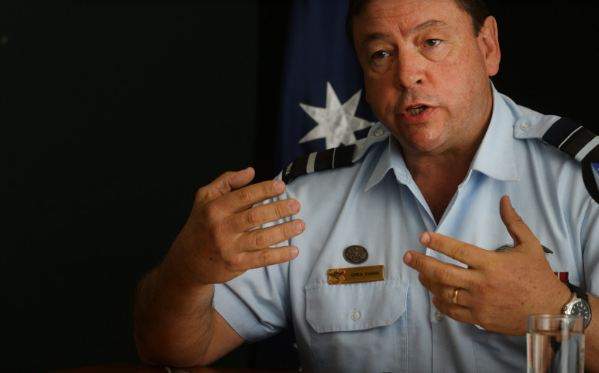
Defence exploring its options
EXPERT reports prepared for the Commonwealth Department of Defence as early as 2003 identified the toxic nature of PFOS and PFOA found in firefighting foam, or (AFFF).
It was “toxic to animals and humans” and linked to fish kills, an internally report released in May 2003 said.
"The project’s Environmental Impact Assessment – contamination assessment, which was prepared in the planning phase of the project, noted the level for PFOS and PFOA contamination within or adjacent to the Joint Strike Fighter (JSF) precinct,” Defence said in a statement.
“Defence continues to investigate other opportunities to prevent localised contamination spreading by the use of either physical barriers or chemical binding additives to contain stormwater.
“As a matter of priority, Defence is continuing to explore and pilot potential remediation and containment options, in consultation with industry and overseas counterparts. Remediation technologies are emerging with continuing research. Defence is also continuing to trial remediation options for testing PFOS and PFOA. Defence is continuing to monitor Australian and international industry progress in the area of water treatment.
“Defence has been undertaking, and will continue to undertake, engagement with the community to provide the community with an opportunity to obtain further information relevant to the issue of PFOS/PFOA and the presence of these chemicals in the Williamtown area.”
Read the full Defence response here
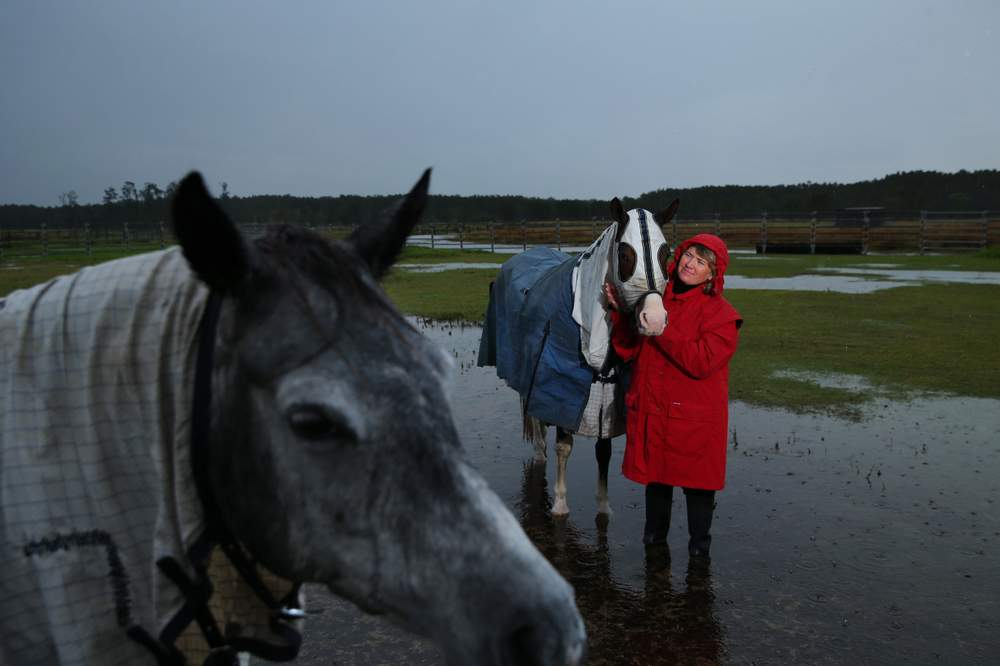
'They knew damn well': resident
THE anger and frustration makes Kim Leeanne King’s voice shakes as she talks about the flooding of her Williamtown property and the role Defence has played in it.
“They knew damn well they were pumping water out onto our properties”, she said.
“I am to the point where I am so tired of it, and you keep hearing things, and it doesn’t surprise me, it just reinforces what we’ve always thought.
"They do it because they are the government and they are accountable to nobody they are habitual offenders.
“For years we grew our own vegetables and ate them and watered them with bore water … do we just sit around and wait to get sick? We have worked our guts out on our property and for what - it’s worth nothing.”
Ms King’s property lies just south of Lake Cochran, an unlined holding pond used by Defence during early construction. Massive volumes of groundwater were funnelled into the lake, and the lake was emptied onto grass nearby to make room.
Defence now acknowledges Lake Cochran is heavily contaminated. Samples taken just south west of the lake returned PFOS concentrations of 2,900 micrograms per litre.
“That’s why the levels on this property were 38.2 micrograms per litre,” Ms King said.
“I still have such grave concerns about the health issues. We did a count and in the last few years there have been 14 people within a 1km radius that have died or beeen diagnosed with cancer. But what do you do –how do you prove it?
“I am so angry with it all – and in the middle of this I have a daughter trying to complete her HSC. I am just so disgusted and outraged by the whole thing.”
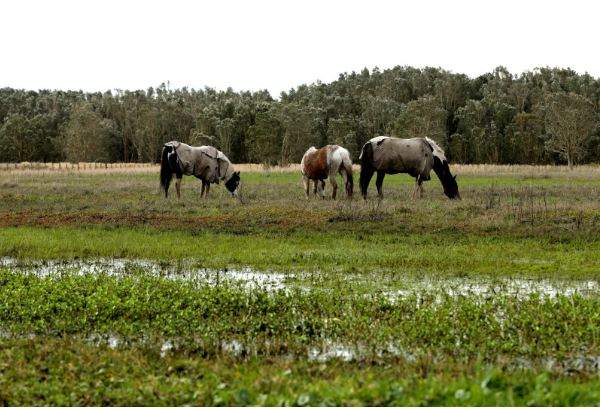
Ms King is far from alone, with 650 households living in the PFOS contamination investigation zone. Those residents also live in fear of the health impacts of the chemicals which have been linked to cancer, kidney disease and infertility.
Fisherman remain without work due to the year-long government-imposed ban on fishing in affected waters, and exposed workers say they have been forgotten.
14 months until clean tap water
MORE than 150 households have been drinking bottled water supplied by Defence since the establishment of the “red zone” in September, and some will wait another 14 months to access clean tap water.
Hunter Water acting chief exectuvie Jeremy Bath said connecting those properties to reticulated water was a priority for Hunter Water and the NSW Government but there was a great deal of planning involved
“It is being done in a three-stage process,” he said.
The first households to be connected would be those living along Fullerton Cove Road, and Lavis Lane, he said.
“But connecting the school, the small commercial area and the residents in parts of Salt Ash is a far more complicated job given the type of trunk main that is in place up there. lanning is continuing, but we won’t be able to start for a few months.
“I know that is not a lot of comfort for the residents - what they want to see is holes in the ground and construction but unfortunately for people in parts of Salt Ash these things are going to take time.
“The worst part of it all was it was no fault of their own. They did nothing to cause this, other than having the terrible misfortune of having bad neighbours.”
Expansion 'significantly problematic'
CRITICS say there is no doubt that removing large amounts of groundwater can have lasting effects on the underground aquifer, and spread contamination.
University of Newcastle hydrologist Steven Lucas said the project should never have gone ahead without detailed groundwater modelling. Even then, the potential for contamination would have remained without extensive remediation, he said.
“Dewatering will shift groundwater if you pump it hard enough, like when you dig a hole at the beach”, he said.
“If they are hurrying things a long to make way for the Joint Strike Fighters, that is appalling.”
Port Stephens MP Kate Washington said it was clear that Defence understood that removing underground water, or “de-watering”, during excavation and construction work could influence groundwater flows and lead to cross-contamination.
“That was one of the reasons why Hunter Water stopped using their bores around the base,” she said. “They were aware it would cause movements in the aquifer and would draw water that might not otherwise be drawn.
“Defence would have known that the expansion would be significantly problematic. It’s wrong on so many levels. It’s such a shallow water table that there is always the interplay between the aquifer and the surface water in any event.”
While the Joint Strike Fighter program was an “amazing asset” for the region because of the economic opportunities that will come with it, Defence has a responsibility to the community which goes beyond the program, she said.